
Texas Isn’t Failing. It’s Being Managed Into a Ditch.
A state this rich should not be this bad at keeping kids safe, hospitals open, teachers secure, schools funded, and people insured. That isn’t freedom. That’s a policy autopsy wearing cowboy boots.

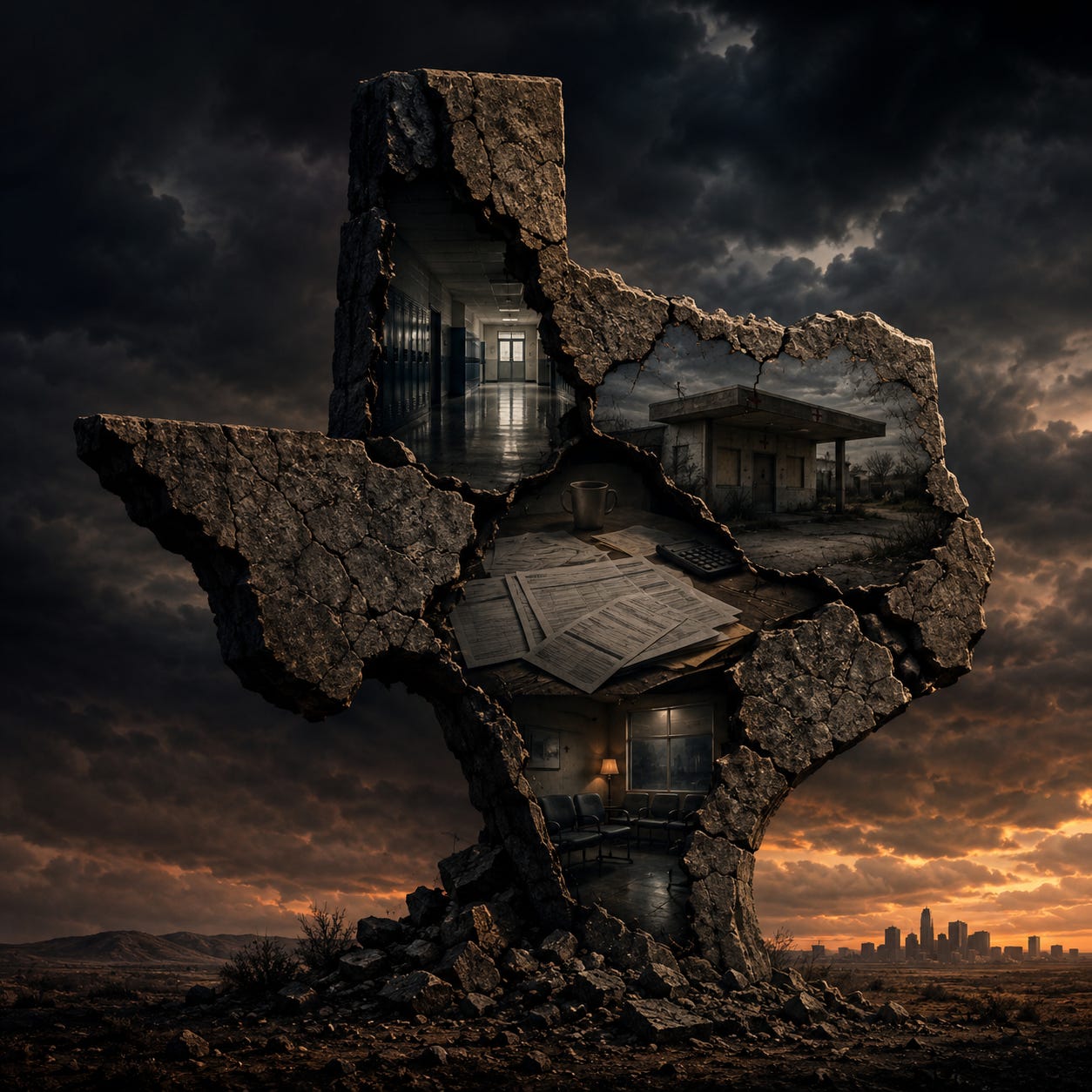
Texas has spent decades selling itself as the land of freedom, grit, business, boots, barbecue, and government so small it can apparently fit inside a school voucher envelope.
But behind the fireworks, flags, and “Don’t Mess With Texas” bumper-sticker cosplay is a much uglier scoreboard: rural hospitals closing, public schools underfunded, uninsured families everywhere, teachers getting squeezed, mental-health access near the basement, and children growing up in schools where “active shooter drill” is somehow treated like a normal part of childhood.
That is not freedom.
That is a policy crime scene with better branding.
And no, this is not about hating Texas. Texas is huge, beautiful, diverse, culturally rich, economically powerful, and full of people who deserve a hell of a lot better than being used as props in some forever-war against “wokeness,” public health, public schools, and basic human decency. The problem is not Texas. The problem is the political machine running it like a Buc-ee’s bathroom with public services attached.
Greg Abbott has been governor since 2015, but the rot did not fall out of the sky last Tuesday wearing a ten-gallon hat. Republicans have held the Texas governor’s office continuously since 1995, which means this is not some temporary glitch in the machinery. This is the machinery. Abbott is just the current foreman standing beside the ditch, smiling like the bulldozer is a family value.
The School Safety State That Keeps Failing Kids
Texas politicians love talking about protecting children right up until protecting children requires doing something more useful than banning books, bullying trans kids, or stapling the Ten Commandments to classroom walls like that is going to stop a bullet.
In 2024, the United States saw at least 205 incidents of gunfire on school grounds, the highest number since Everytown began tracking in 2013. Those incidents left 58 people dead and 156 injured. That is not a “culture problem” in the vague, bumper-sticker way politicians love. That is a national disgrace with state-level enablers feeding it by the truckload.
And Texas has no room to smirk from the sidelines. The K-12 School Shooting Database found that gun incidents on Texas school campuses rose sharply over the last two decades, with Axios reporting 30 such incidents from 2004 to 2013 and 10 more already recorded by late April 2024 alone.
Then there is Uvalde.
Nineteen children and two teachers were murdered at Robb Elementary in 2022. That is the sentence. That is the wound. That is the part no amount of “thoughts and prayers” can rinse clean. Texas leaders had every reason after that to become a national model for serious school safety, firearm accountability, mental-health access, and emergency response reform. Instead, the state kept leaning into the same old political theater: more guns, more culture war, more moral panic, more “freedom” wallpaper over the bullet holes.
You can tell a lot about a government by what scares it. Texas leadership seems more frightened of a history book, a rainbow sticker, or a poor child getting lunch than it is of children learning how to hide from gunfire before they learn long division.
That is not toughness. That is cowardice in a flag pin.
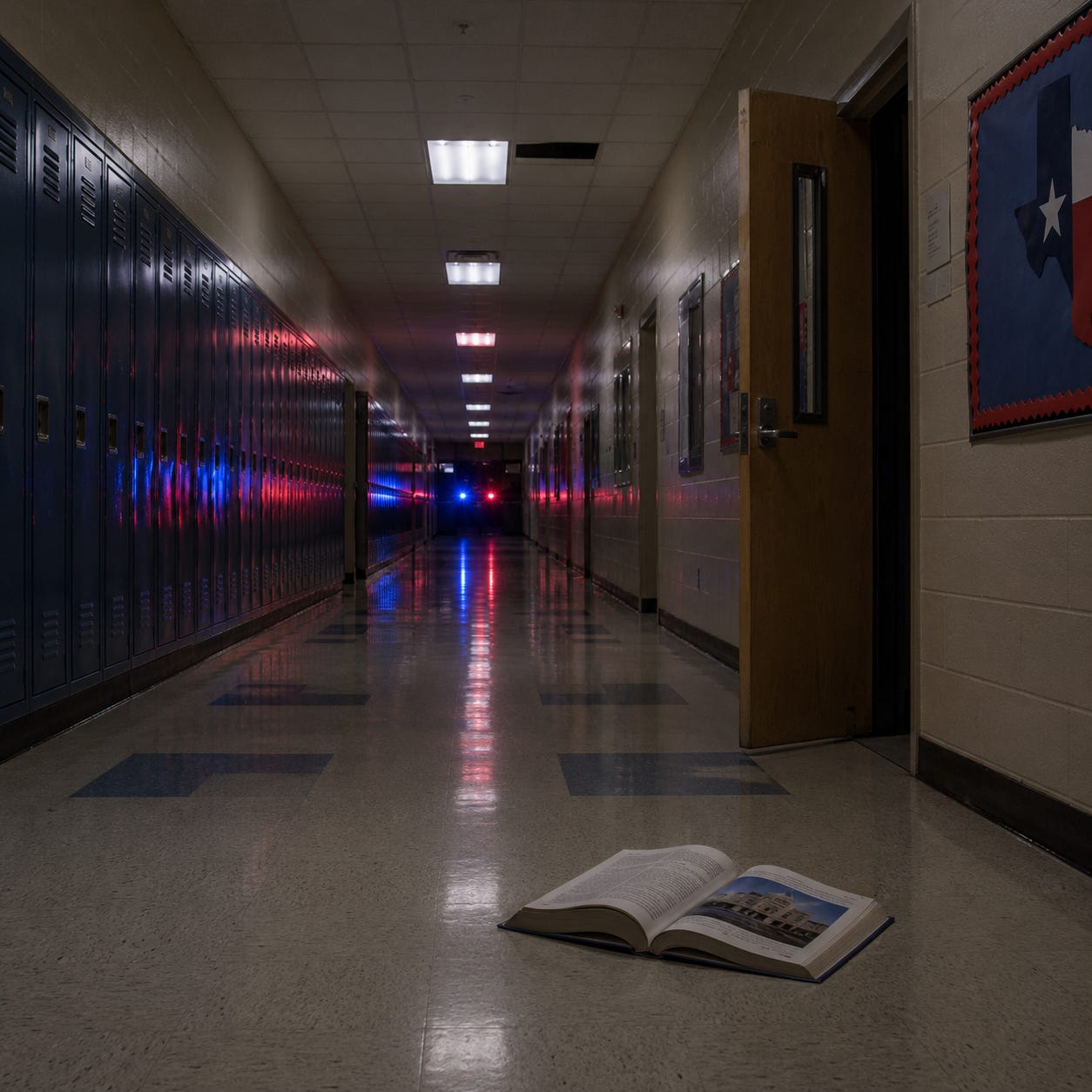
The Public Schools: Starved First, Privatized Later
Abbott’s education agenda tells you exactly where the priorities are.
In May 2025, he signed a $1 billion school voucher bill, one of the largest voucher programs in the country. It uses public money for private school tuition and starts with up to $10,000 per student, with higher amounts for some students with disabilities. Supporters called it “school choice.” Critics warned, correctly, that it risks draining money and political oxygen from the public schools that still educate the overwhelming majority of Texas children.
Then, after years of districts screaming that they were drowning, Abbott signed House Bill 2, an $8.5 billion public education funding package that included money for teacher and staff raises. Fine. Put it on the record. Money did move. Some districts benefited. Some teachers got raises. Reality deserves receipts, not fan fiction.
But here is the trick: when you underfeed something for years, you do not get a hero parade for tossing it a sandwich after you already handed the steakhouse gift card to private-school interests.
The research behind this draft found that recent NEA comparisons placed Texas in the mid-to-late 40s nationally on per-student current expenditures, with the newer figure worse than the older “41st” number often thrown around in political graphics.
So yes, Abbott signed new school funding.
And yes, Texas still has a long-running public-school starvation problem.
Both things can be true. One is a press release. The other is the plumbing.
Rural Hospitals: Where “Small Government” Comes With a Long Drive to the ER
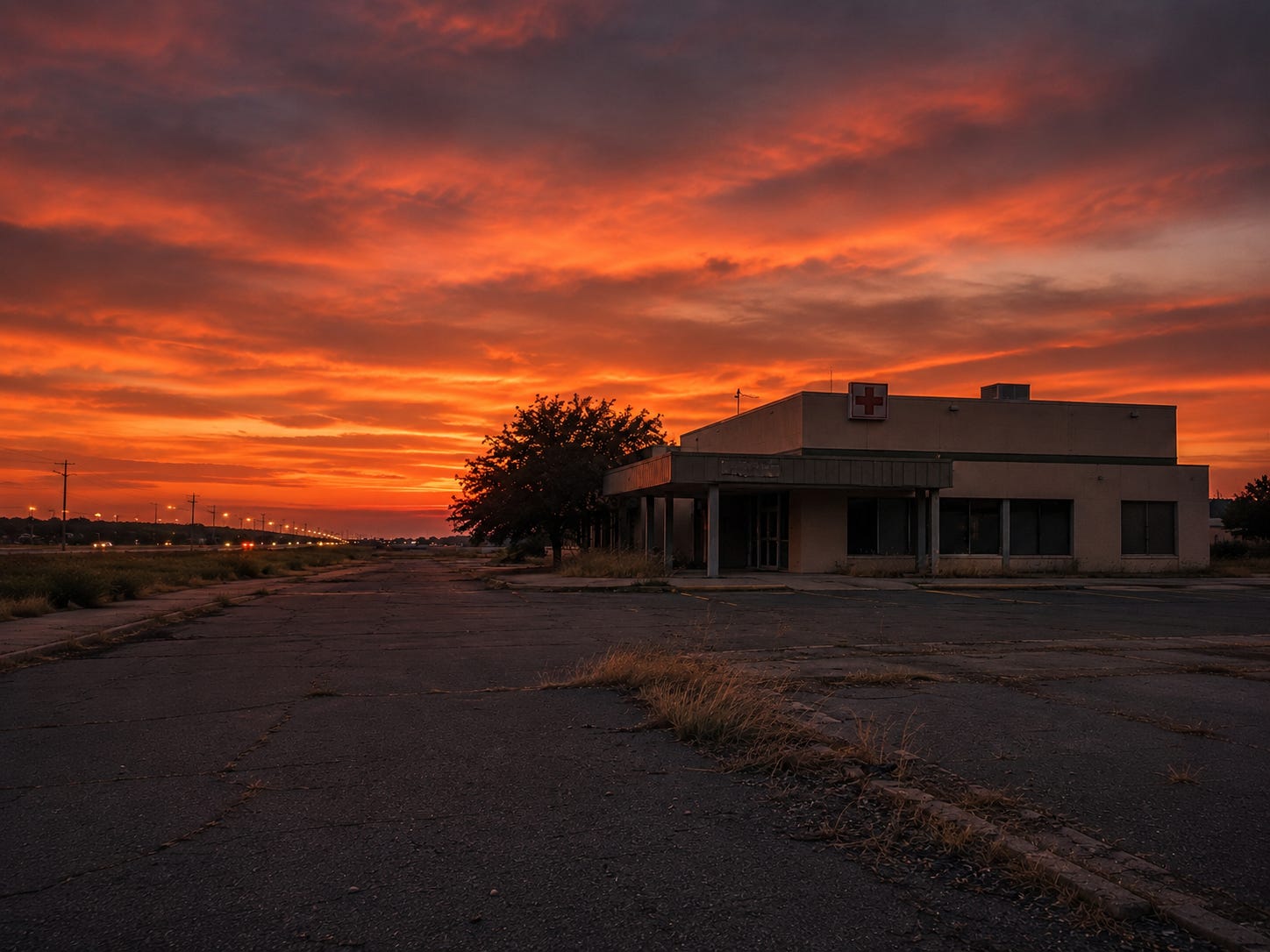
Rural Texas is frequently used as a political prop by the same leaders whose policies help make rural life harder, sicker, and more dangerous.
There is nothing abstract about a rural hospital closure. It means longer drives during strokes, heart attacks, complicated pregnancies, farm injuries, mental-health crises, and emergencies where minutes decide whether someone comes home or becomes a GoFundMe with a funeral date.
The uploaded source review notes that Texas has had 24 rural hospital closures since 2005, the highest number in the country, and that a 2025 Chartis rural-health assessment flagged Texas as having the largest number of rural hospitals considered vulnerable to closure.
This is what happens when “limited government” becomes an excuse for limited survival.
Nationally, rural hospitals remain under severe financial pressure; Reuters reported in 2026 that more than 400 rural hospitals were considered vulnerable to closure, drawing on Chartis and UNC Sheps data.
Texas leaders know this. They have known it for years. But instead of treating rural health care like basic infrastructure, they keep acting like the free market is going to ride into a dying county on a white horse with an MRI machine strapped to the saddle.
Spoiler: it will not.
A hospital does not stay open on slogans. An emergency room does not run on “personal responsibility.” A maternity ward cannot be replaced by a campaign ad about liberty.
And when people in rural communities are forced to drive an hour or more for care, that is not rugged independence. That is abandonment with a boot logo.
The Uninsured Capital of America
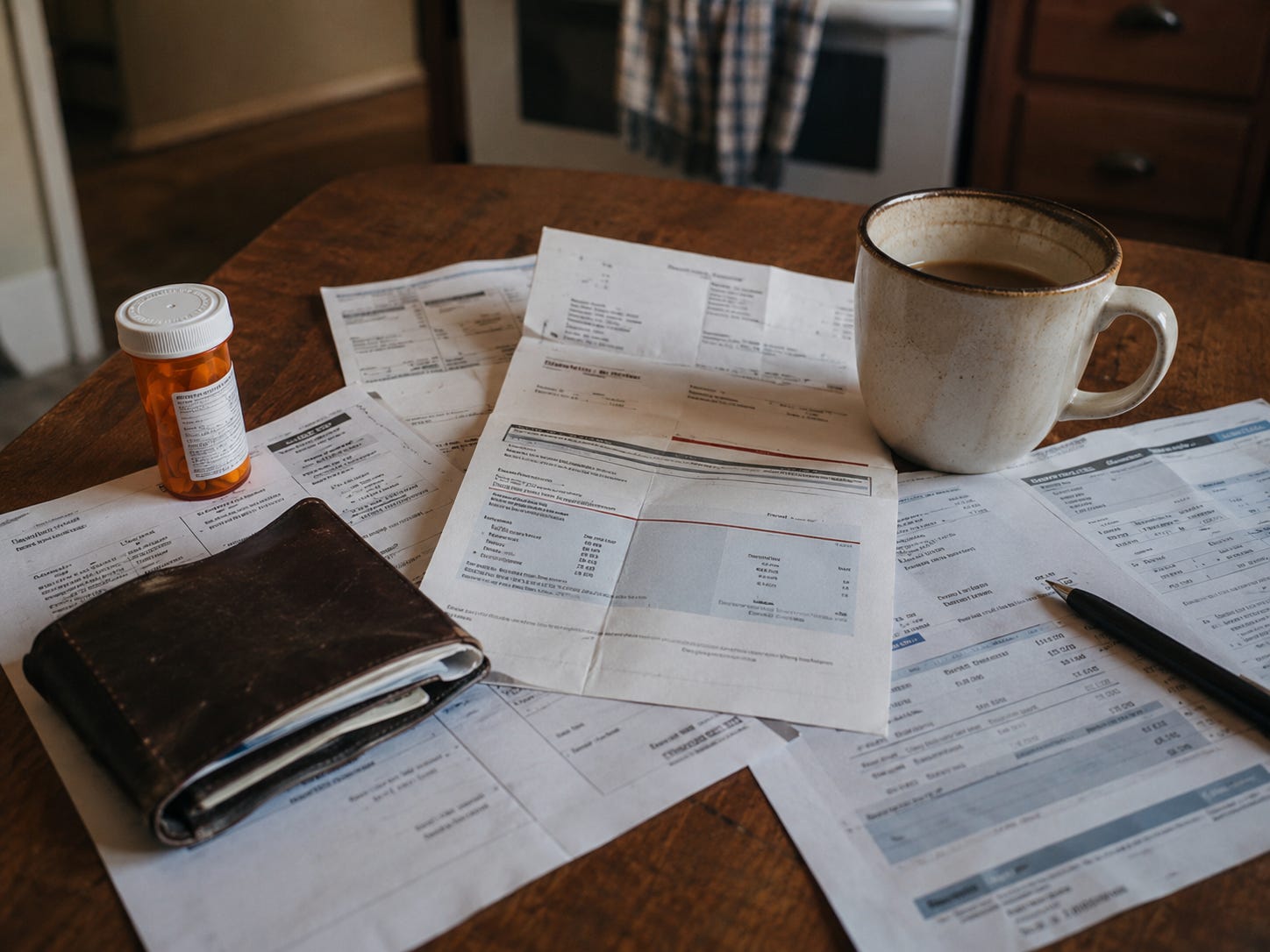
Texas is the richest kind of ridiculous: a massive economic powerhouse that still manages to leave millions of people without health coverage.
According to the Commonwealth Fund reporting cited by Axios and the San Antonio Express-News, Texas had the highest uninsured rate for working-age adults in the country, with 21.6% of adults ages 19 to 64 lacking health coverage in 2023. The national rate was about 11%.
That is not a rounding error. That is not a “whoopsie.” That is a deliberate policy environment.
The Commonwealth Fund also ranked Texas worst in the nation for health care access and affordability and second-to-last overall in state health-system performance, ahead of only Mississippi. When your defense is “at least we beat Mississippi,” it may be time to stop wearing sunglasses indoors and look directly at the damn problem.
And yes, Medicaid expansion matters. States that expanded Medicaid under the Affordable Care Act saw the steepest drops in uninsured rates, while Texas remains one of the states that has refused expansion.
That refusal has consequences. Real ones. The kind that show up as skipped appointments, untreated diabetes, delayed cancer screenings, medical debt, emergency-room overuse, rural hospital strain, and families choosing between a doctor and rent.
But sure, let’s keep pretending the real threat is drag queens reading picture books.
Mental Health Care: Don’t Have a Crisis Unless It Fits the Budget
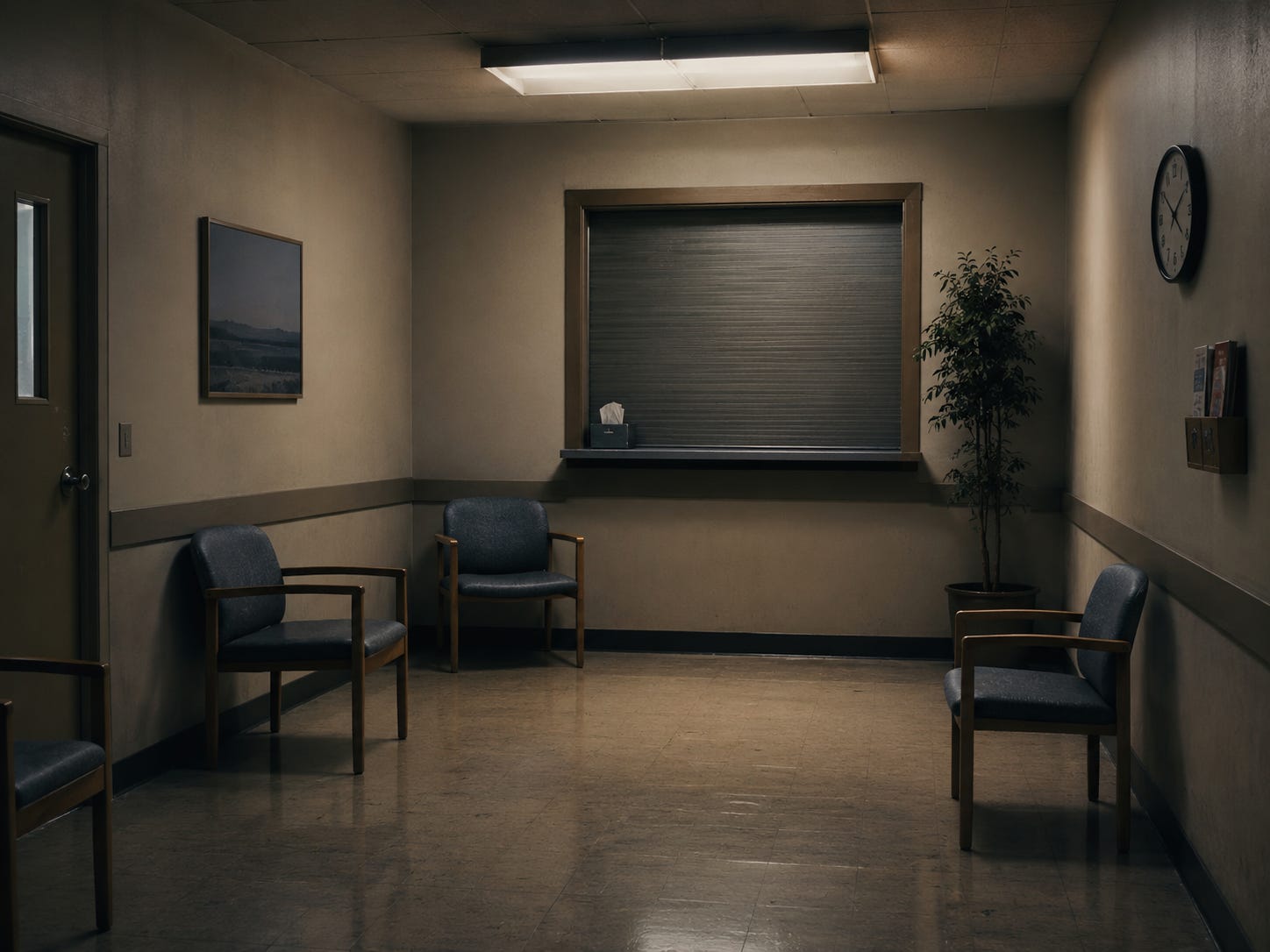
Texas also has a mental-health access problem so big it should have its own area code.
The uploaded source review notes that Mental Health America’s 2025 ranking placed Texas 50th in access to mental health care, using measures like unmet need, uninsured adults with mental illness, youth not receiving services, preventive-care gaps, and workforce availability.
That tracks with the broader shortage picture. AP reported that Texas faces a severe mental-health workforce problem, with 98% of counties designated as Mental Health Professional Shortage Areas.
So let’s translate that into plain English: if you are struggling in Texas, the system may tell you to wait, drive, pay, pray, or collapse quietly where it does not inconvenience the donors.
This is where the cruelty becomes especially stupid. Mental-health care is not some luxury spa treatment for people who use words like “self-care” while buying $14 candles. It is part of public safety. It is part of school safety. It is part of addiction recovery. It is part of homelessness prevention. It is part of keeping families intact, veterans alive, teenagers supported, and communities functional.
But Texas leadership keeps treating mental health like an afterthought, then acts shocked when untreated crisis spills into schools, streets, jails, emergency rooms, and morgues.
That is not fiscal conservatism. That is buying a smoke alarm after the house is already ash and calling yourself a planner.
Teachers: Thank You for Your Service, Now Please Enjoy This Financial Wedgie
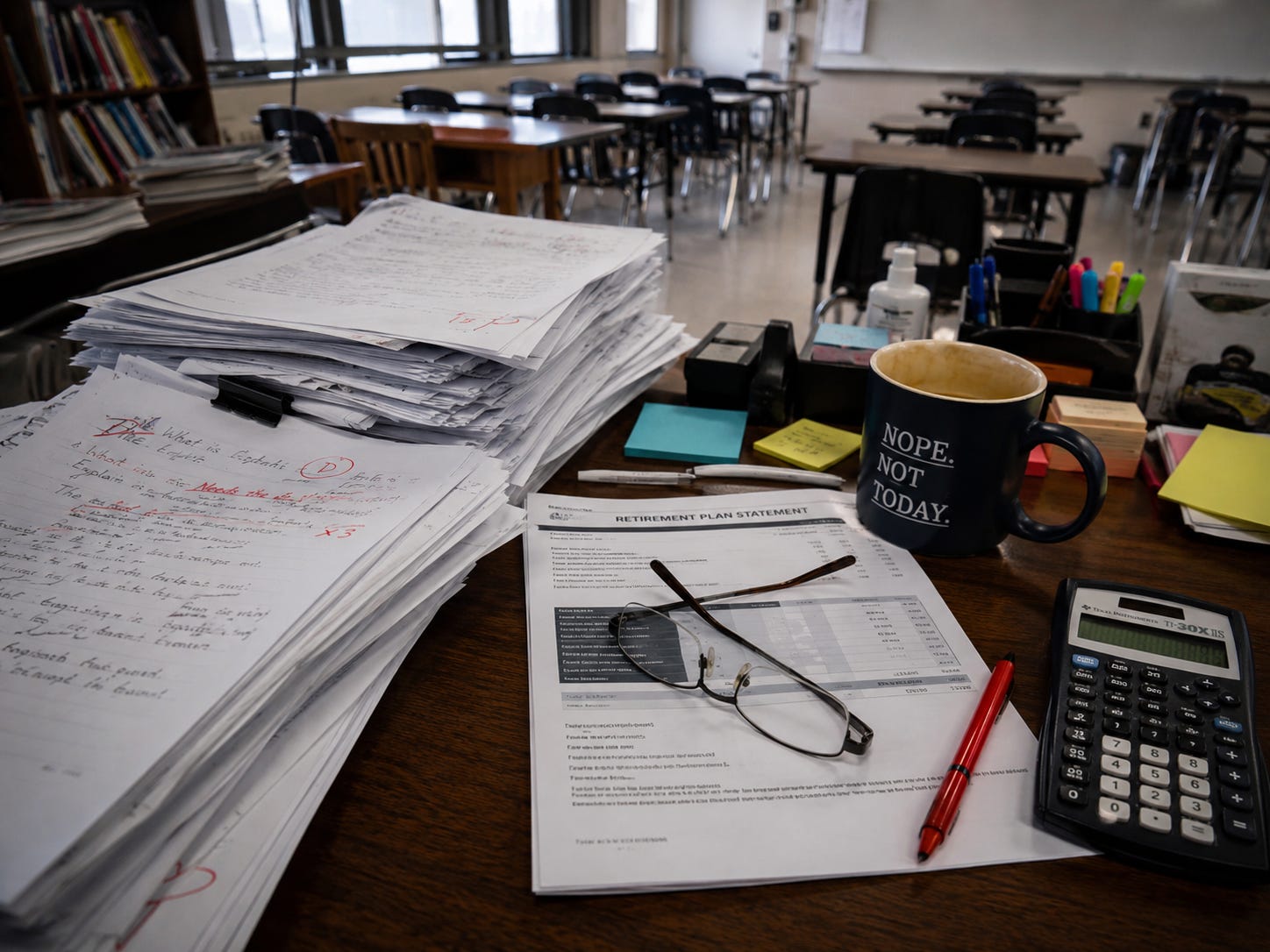
Texas loves to praise teachers in the same way cheap bosses praise employees right before denying raises.
“Heroes.”
“Essential.”
“Called to serve.”
“Backbone of our communities.”
Great. Now pay them like adults and stop treating retirement security like a party favor.
The source review behind this piece found that a widely cited Equable Institute comparison ranked Texas 49th for new teacher retirement benefits, while official TRS materials cited in that review showed an average monthly annuity of $2,317 and a 2025 actuarial valuation with an unfunded liability rising to $64.9 billion.
That older 49th-place ranking should be handled honestly because it is not a brand-new 2026 scoreboard. But the underlying point remains brutal: Texas depends on teachers, piles more political nonsense onto them every year, then acts confused when the profession starts looking like a burnout factory with bulletin boards.
Teachers are expected to educate children, absorb trauma, manage lockdown drills, navigate culture-war laws, buy supplies out of pocket, communicate with parents, collect data, prep tests, preserve morale, and somehow smile while politicians use public schools as punching bags.
Then the same politicians call them “indoctrinators” whenever a child learns something more complicated than a refrigerator magnet.
It is obscene.
The Culture War Is the Distraction. The Collapse Is the Point.
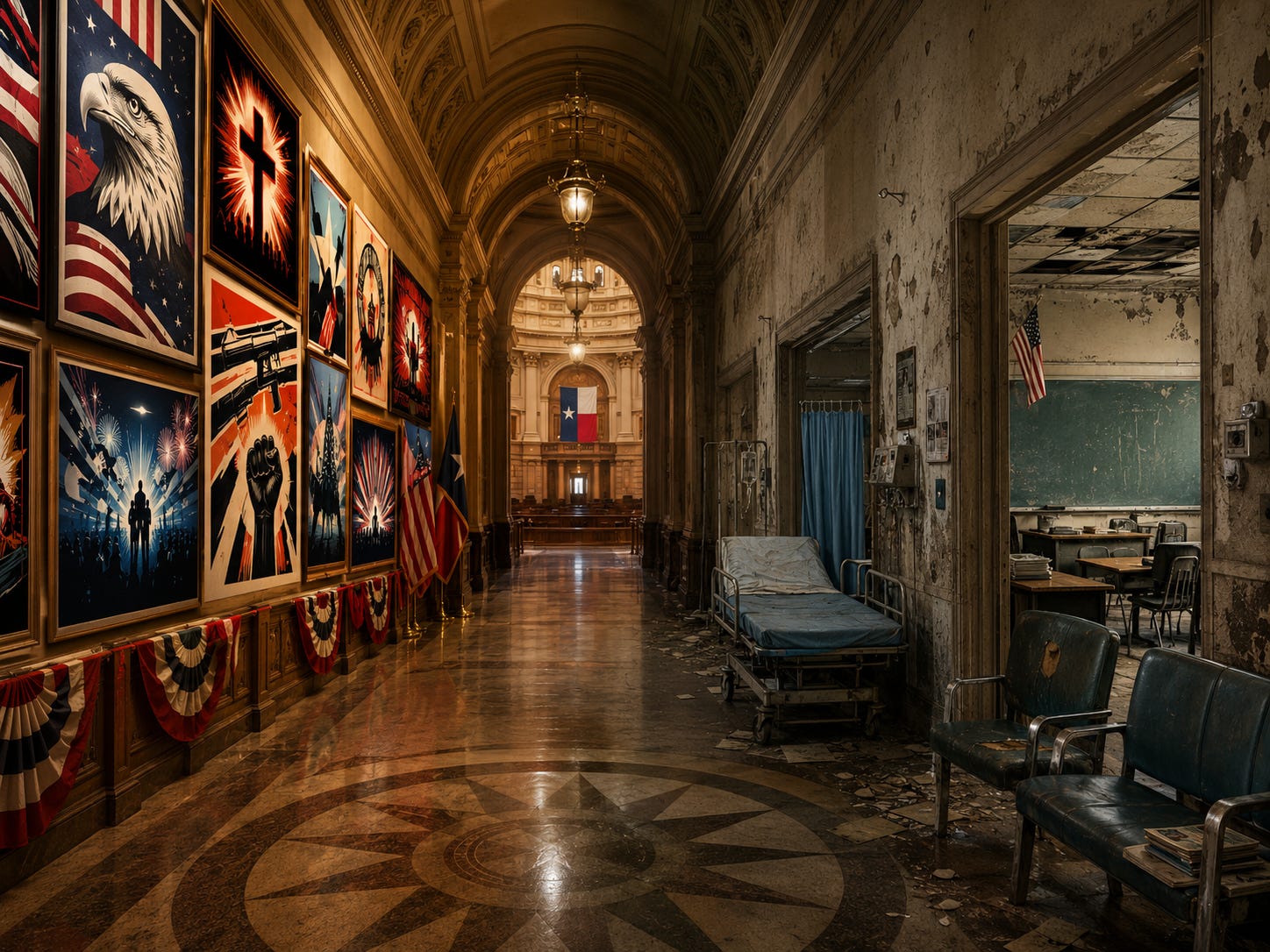
This is the part that matters: the failures are connected.
Underfund public schools long enough, and vouchers start sounding like rescue boats.
Refuse Medicaid expansion long enough, and hospitals start bleeding money.
Let rural hospitals close, and small towns become harder to live in.
Ignore mental-health access, and crisis moves into jails, schools, streets, and emergency rooms.
Keep people uninsured, and preventable problems become expensive disasters.
Squeeze teachers, and the pipeline dries up.
Then the same political class responsible for the damage shows up with a microphone and says government does not work.
Of course it does not work when you keep electing people who treat public systems like piñatas.
Texas is not proof that conservative governance works. Texas is proof that a state can be economically powerful and still politically negligent. It can attract business while failing families. It can build highways while losing hospitals. It can brag about freedom while pricing people out of health care. It can fund vouchers while telling public schools to clap harder for scraps.
That is not governance.
That is sabotage with a chamber-of-commerce smile.
This Is the Product
At some point, voters have to stop grading politicians by what they say they value and start grading them by what their systems produce.
Texas produces too many uninsured families.
Too many struggling rural hospitals.
Too many underfunded classrooms.
Too many teachers asked to do the impossible for too little.
Too many people waiting too long for mental-health care.
Too many kids growing up with lockdown drills as part of the school calendar.
And through it all, the state’s leaders keep selling the same tired snake oil: more privatization, more guns, more culture war, more deregulation, more cruelty dressed up as common sense.
The Texas miracle is not that this works.
The Texas miracle is that they keep getting people to call it freedom.
Because when a state this rich cannot keep hospitals open, cannot insure its people, cannot properly fund its schools, cannot protect teachers, cannot provide mental-health access, and cannot keep children from rehearsing how to survive gunfire, the problem is not lack of money.
The problem is priorities.
And Texas leadership has shown its priorities with the subtlety of a drunk bull in a Hobby Lobby.
They want the credit for prosperity without the responsibility for the wreckage. They want the ribbon cuttings without the emergency-room closures. They want the school-choice applause without the public-school consequences. They want to call themselves pro-life while letting health care, mental health, rural access, and child safety rot in real time.
That is not leadership.
That is ideological cosplay with casualties.
Texas deserves better than being run like a red-state laboratory where every failed experiment gets renamed “freedom” and injected into the next election cycle.
The state is not failing by accident.
It is being managed into a ditch.
And the people holding the steering wheel keep asking for applause.